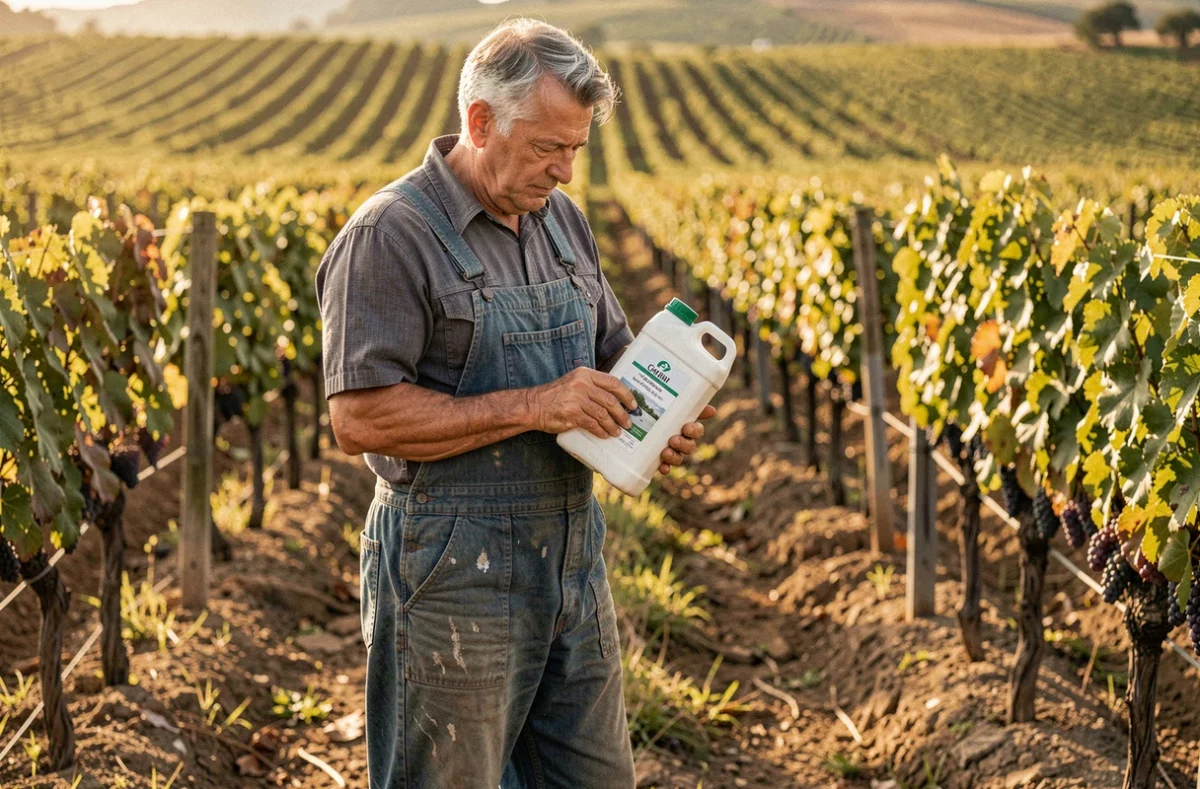
When looking for a glyphosate 360 herbicide in Portugal, the temptation is to rely solely on the concentration indicated on the container. In practice, this approach leads to costly mistakes. Between the European authorization of the substance and the product actually approved for specific use in Portugal, there is a gap that many individuals and farmers underestimate.
National DGAV Authorization: the number to check on every glyphosate container
The European approval of glyphosate, renewed until December 15, 2033, by implementing regulation (EU) 2023/2660, does not mean that any container labeled “glyphosate 360” can be sold or used freely in Portugal. Every commercial formulation must have a marketing authorization issued by the DGAV (Direção-Geral de Alimentação e Veterinária), the competent Portuguese authority.
Specifically, one must check the authorization number printed on the label. A product circulating without this number, or whose number does not match the DGAV database, is a non-compliant product, even if its chemical composition appears identical to an approved herbicide.
Before any purchase of glyphosate 360 in Portugal, one should start here: the DGAV number, the approved uses listed on the label, and the validity date of the authorization. A product may be withdrawn from the national market while the substance remains approved at the European level.
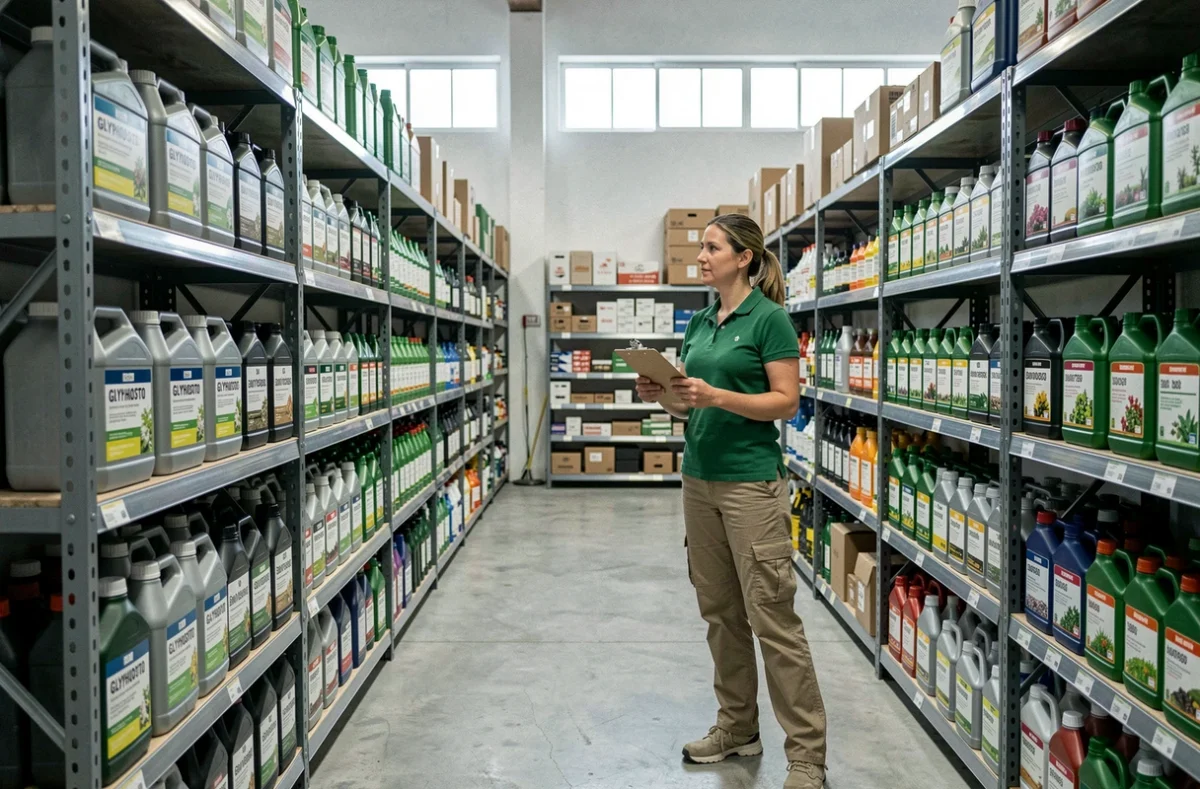
Usage restrictions imposed by the European regulation on glyphosate
The 2023 renewal is not a blank check. The European regulation has introduced technical constraints that member states must incorporate into their national authorizations. Two restrictions deserve particular attention in Portugal.
Ban on desiccation before harvest
The use of glyphosate as a desiccant before harvest is prohibited. This practice, which involved spraying the herbicide on crops to accelerate drying before harvest, is no longer among the authorized uses. For Portuguese farmers accustomed to this method on certain cereals, the change is direct.
Buffer zones and spray drift
The regulation also provides conditions regarding spray drift and the establishment of buffer zones. In practice, one can no longer treat in the immediate vicinity of watercourses or sensitive areas without respecting minimum distances. These distances depend on the spraying equipment used and are indicated on the label of the approved product.
Feedback varies on the actual application of these buffer zones from one operator to another, but DGAV inspections may focus on this specific point.
Label and hazard classification of glyphosate 360: what the pictogram tells you
Beyond the media debate on carcinogenicity, the label of a glyphosate-based product sold in Portugal carries regulatory information that is rarely read in detail. The harmonized hazard classification at the European level for formulations containing glyphosate includes specific mentions.
Here are the elements to look for on the label before use:
- Hazard statements H: they indicate risks to health and the environment. A formulation at 360 g/L may carry different statements from another at the same concentration, depending on the co-formulants present in the product.
- GHS pictograms: the diamond with an exclamation mark (irritant) or the one with the tree and fish (hazardous to the aquatic environment) are the most common on these products.
- Precautionary statements P: they detail the required personal protective equipment (gloves, goggles, protective clothing) and the re-entry times into the treated area.
- Maximum dose and number of applications per campaign: exceeding the approved dose puts the user’s liability at risk, even on private property.
Thus, two products labeled “glyphosate 360” can have different hazard profiles. It is the co-formulants that vary the classification, not just the active substance.
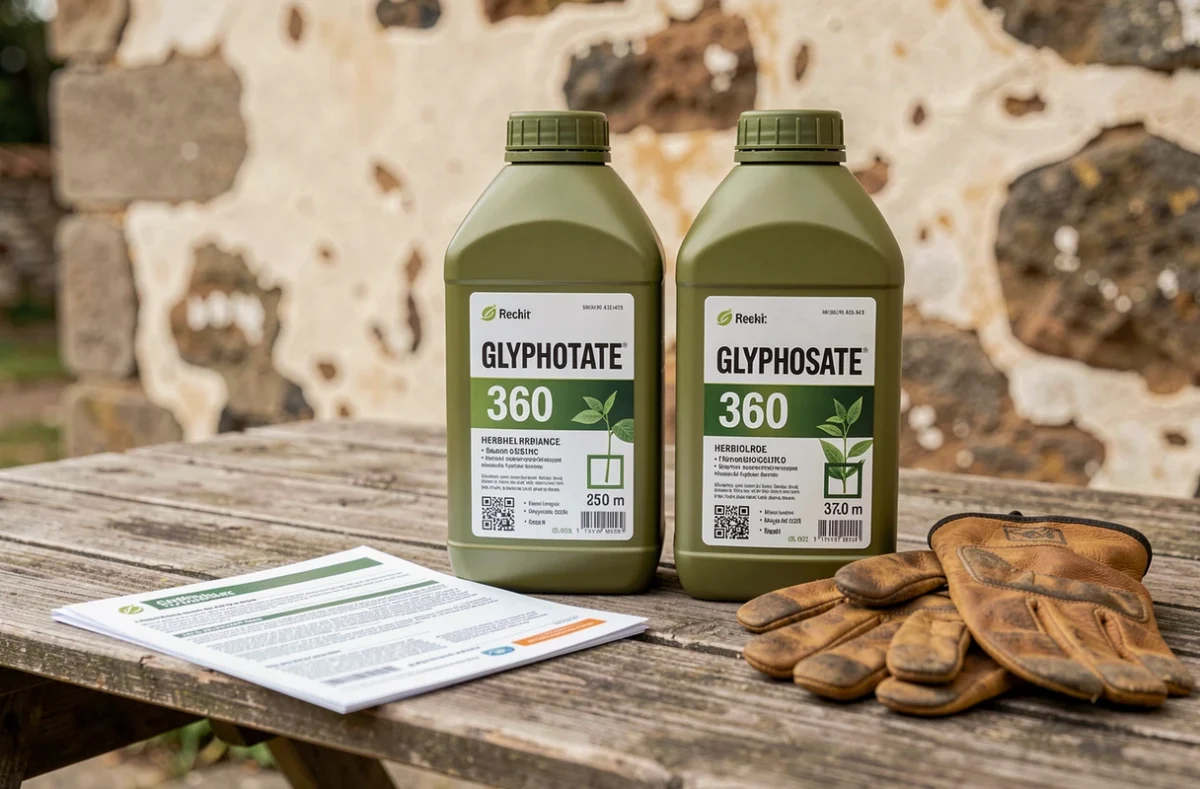
Glyphosate for individuals in Portugal: purchase conditions and alternatives
In Portugal, the sale of phytopharmaceutical products to individuals is regulated. Unlike France, where the ban for amateur gardeners has been in effect for several years, the Portuguese framework remains more flexible on this point. Certain formulations can still be obtained in agricultural cooperatives and garden centers.
However, this accessibility does not exempt one from verifying that the product is indeed approved for non-professional use. Some formulations are reserved for holders of an applicator certificate. The absence of a certificate may render the purchase non-compliant, even if the seller does not systematically ask for it.
Authorized alternative solutions
For individuals who do not wish to handle glyphosate, several options exist in Portugal as elsewhere:
- Thermal weeding (gas or infrared burners), effective on young weeds.
- Herbicides based on pelargonic acid, authorized for individuals and acting quickly by contact.
- Organic or mineral mulching, which reduces germination without chemical recourse.
These alternatives cover most routine maintenance needs, but their effectiveness on established perennials remains significantly lower than that of a systemic herbicide like glyphosate.
Controls and traceability: what changes for foreign buyers
Nationals from other European countries who buy glyphosate in Portugal to bring back home are subject to the regulations of their country of residence. Importing a phytopharmaceutical product not authorized in one’s country constitutes an offense, regardless of its legality in Portugal.
The traceability of purchases in Portugal remains limited for individuals: no mandatory register, no systematic declaration. But in the event of customs or phytosanitary control upon return, it is the national legislation of the country of arrival that applies. In France, the penalties for importing unauthorized products include confiscation and fines.
The Portuguese framework offers broader access to glyphosate 360 than most neighboring countries, but this accessibility relies on specific conditions: valid DGAV authorization, compliant label, and respect for approved use. Buying a container without checking these elements amounts to taking a regulatory risk, whether one is a farmer or an individual.