In France, maternal burnout is not listed as such in any medical classification. The World Health Organization reserves the term burnout for the workplace context alone.
The experience itself is documented in research: Santé publique France describes physical and emotional exhaustion linked to excessive parental stress and a lack of support. The difficulty is that the mothers affected often keep functioning, making it hard for both those around them and healthcare professionals to recognize the signs.
Maternal burnout in the mother who “keeps it together”: what the façade conceals
The trap of maternal burnout lies in a paradox: the most exhausted mothers are often the ones who seem to be coping best. Medical appointments are booked, meals are prepared, and homework is monitored. Outwardly, everything appears to be functioning as usual, which delays recognition by loved ones and healthcare providers.
This outward appearance of coping is sustained by a mechanism researchers describe as autopilot. The mother goes through the motions of daily life without being fully present. Her emotional availability diminishes, not because she loves her children any less, but because her psychological reserves are running dangerously low. It is a form of self-protection, not a choice.
To understand maternal burnout, you need to look beyond the question “Are you managing?” and pay attention to what is happening behind the scenes: shorter sleep without a medical reason, disproportionate irritability in response to everyday situations, and a gradual withdrawal from activities that used to bring pleasure.
Three questions that bring the invisible into view
Rather than asking a mother if she is doing well (the answer will almost always be yes), certain questions offer a clearer picture of the burden she is carrying:
- Who gets up at night when the child cries, and who falls back asleep first? This question measures how sleep is actually shared, not what the co-parent says they intend to do.
- When was the last time you did something for yourself without having to organize it? Not being able to answer spontaneously is a sign that time to recharge has disappeared or depends entirely on additional planning.
- If you did nothing for 48 hours, who would take over without you having to prepare everything? This question identifies whether practical support is genuinely available, rather than merely theoretical.
Mental load and isolation: signs that rest cannot fix
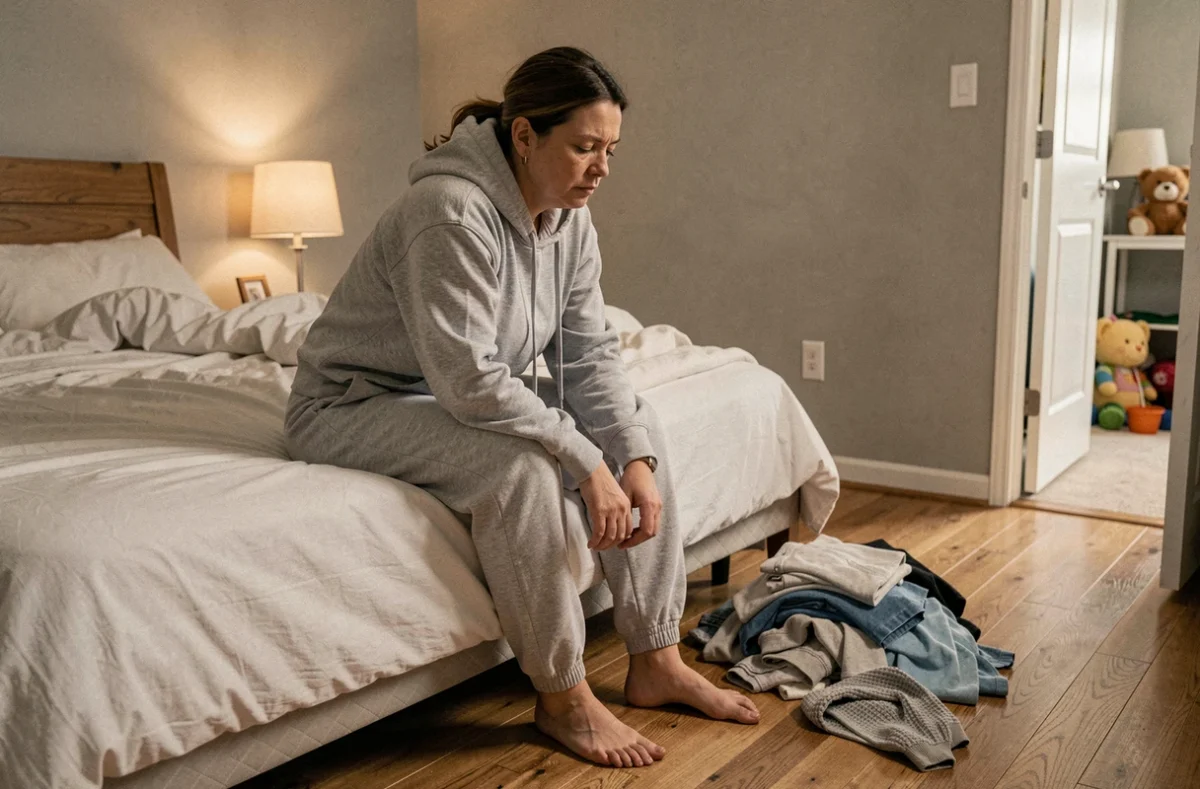
A weekend of rest does not resolve maternal burnout. The distinction is clear: ordinary tiredness fades with sleep, while parental exhaustion persists even after rest. If a mother returns from a weekend without the children and feels a knot in her stomach at the thought of going back to everyday life, it is no longer just tiredness.
Mental load plays a central role. Planning meals, anticipating appointments, managing seasonal clothing, coordinating activities: this constant management never stops, even when the body is resting. Research cited in the policy review of the “First 1,000 Days” highlights the persistence of an unequal division of parental responsibilities and the lack of services specifically designed for fathers and co-parents.
Isolation makes things worse. A mother who no longer sees her friends, who turns down invitations because she lacks the energy or feels guilty about leaving the children, becomes trapped in a cycle where her resources dwindle while the demands remain constant.
Signs of maternal exhaustion not to confuse with postpartum depression
Making a differential diagnosis deserves particular attention, especially in the months following a birth. Postpartum depression can share symptoms with maternal burnout (sadness, withdrawal, loss of pleasure), but it is a distinct mood disorder that requires specific medical care.
A useful distinction: parental burnout is centered on the role of being a parent. A mother may still enjoy other areas of life (work, hobbies) while feeling drained as soon as she returns to family life. With depression, the loss of pleasure tends to affect all activities. This distinction is no substitute for medical advice, but it can help with initial recognition.
Practical support: beyond the advice to “take some time for yourself”
Telling an exhausted mother to take care of herself simply adds another task to her list. The right question is not “What can you do for yourself?” but “Who can actually take on some of the things you do?”
Home help through the CAF can now explicitly target the prevention of parental exhaustion. Referrals are made through a healthcare professional or social worker, and the support is intended to ease some everyday tasks and create time to recharge. This service remains underused because few people know about it.
Local support services are taking shape around the “Maisons des 1 000 premiers jours” (First 1,000 Days Centers). These centers bring together health prevention, PMI (maternal and child health services), and parenting support, offering both group sessions (where parents can talk with one another) and one-to-one support. Help can come through a local coordination center, not just a medical appointment.
What loved ones can do right away
People around an exhausted mother often offer help in vague terms (“Let me know if you need anything”). This puts the burden of asking for help back on the mother herself. Taking the initiative and offering something specific changes the dynamic:
- Pick up the children on the same day each week, without the mother having to ask or organize an activity for them.
- Take care of an entire meal (shopping, cooking, and cleanup), rather than just “helping out in the kitchen.”
- Handle the child’s medical appointment from start to finish: booking it, providing transportation, and reporting back afterward.
Maternal burnout is not a lack of parenting skills. It is the result of a prolonged imbalance between what is demanded and the support available. Assessing who actually carries the day-to-day load is the first step in recognizing it, well before turning to any list of symptoms.