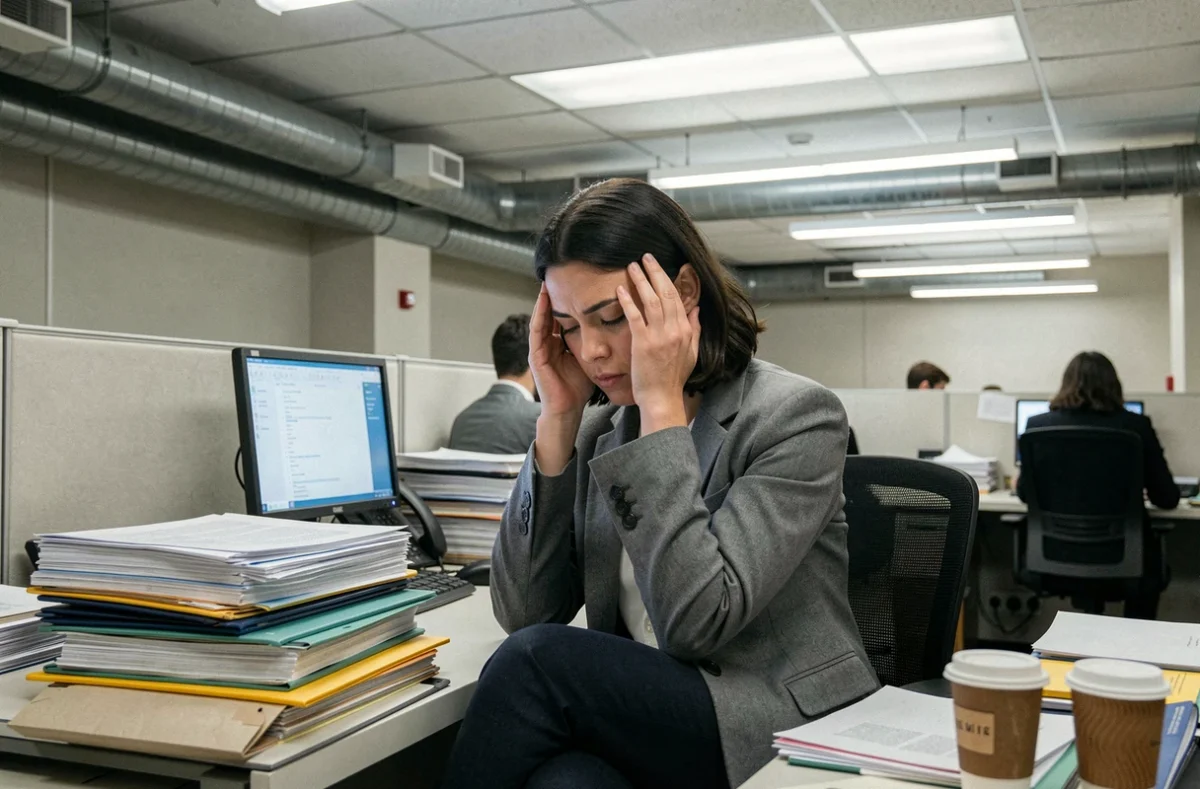
The absence of a window in an office changes several measurable factors: light levels, the light spectrum reaching the eye, and visual contact with the outdoors. Each of these factors affects distinct physiological mechanisms. Working in a windowless office can have documented effects on sleep, eye strain, and mood, but they do not all carry the same weight.
Minimum regulatory lighting levels: offices with and without windows
The French Labour Code sets different lighting thresholds depending on the layout of the premises. These thresholds are minimum requirements, not comfort recommendations.
| Type of premises | Minimum regulatory lighting level | Notes |
|---|---|---|
| Office with natural light | 120 lux | Threshold for standard work premises |
| Windowless office, permanent work | 200 lux | Higher threshold to compensate for the lack of natural light |
A windowless room must therefore provide higher levels of artificial lighting. In practice, the difference between 120 and 200 lux is modest compared with the levels of natural light a glazed office receives during the day, which can reach several thousand lux depending on its orientation and the season.
In other words, meeting regulatory requirements in a windowless office does not guarantee adequate lighting comfort. A space that meets the 200-lux minimum may still feel dark and monotonous to its occupants.
When looking at the real effects of working in a windowless office, the issue goes beyond the simple lux reading shown on a light meter. The light spectrum, how it changes throughout the day, and the view outdoors each play a distinct role.
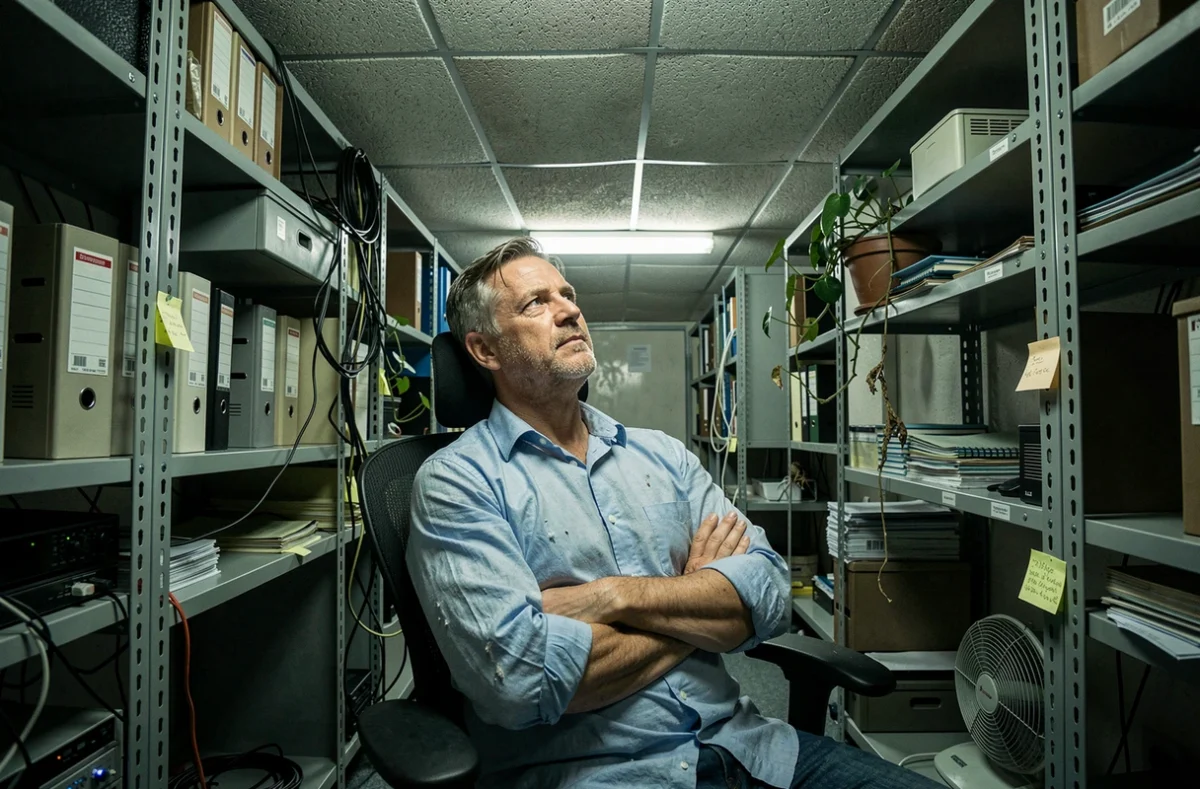
Circadian rhythm and sleep quality without natural light
Natural light varies in intensity and color temperature throughout the day. In the morning, its spectrum is richer in blue light, which suppresses melatonin and promotes alertness. Toward the end of the day, warmer tones predominate, helping prepare the body for sleep.
Standard artificial lighting, even when set to 200 lux, provides a fixed spectrum. The brain does not receive the time cues that synchronize the body clock. As a result, the sleep-wake cycle gradually shifts, making it harder to wake up and increasing drowsiness in the early afternoon.
This shift is not insignificant. Fragmented or shifted sleep affects concentration, mood regulation, and physical recovery. Workers in this situation often report persistent fatigue that a weekend of rest does not fully resolve.
Dynamic-spectrum artificial lighting: a possibility, not proof
Lighting systems designed to mimic the changing spectrum of daylight are available on the market. They work by adjusting color temperature and intensity according to the time of day.
Available evidence on their effectiveness remains limited. Dynamic lighting is a promising option, not a substitute with proven benefits. Installing such a system does not remove the need to assess how work is organized, particularly whether employees can access daylight during breaks.
Eye strain and musculoskeletal disorders in enclosed spaces
The human eye constantly alternates between near and distant vision. In a windowless office, the available depth of field is limited to the walls of the room, often just a few metres away. The eye remains focused at short distances, continuously straining the ciliary muscle.
Common symptoms include:
- Dry eyes caused by a reduced blink rate when looking at a screen, made worse by the lack of natural changes in lighting
- Headaches at the end of the day, often around the forehead or eye sockets
- Temporary blurred vision when switching to a distant view, for example when leaving the building
The absence of a window also removes involuntary visual micro-breaks. Even a brief glance outside relaxes the eye’s focusing muscles and interrupts screen fixation. Without this opportunity, eye strain builds up faster and sets in earlier in the day.
Posture is affected too. An employee experiencing visual discomfort may lean toward the screen, round their shoulders, and tense their neck. Repeated over several weeks, these postural adjustments contribute to musculoskeletal tension in the neck and lower back.

Views outdoors and mental health: two separate issues
A room can receive natural light without offering a view outdoors, for example through a light well or an opaque glass roof. Conversely, a window may look onto a neighbouring wall without letting in significant amounts of light.
These two factors affect different aspects of well-being:
- Natural light affects physiology (circadian rhythm, vitamin D production through skin exposure, and hormonal regulation)
- A view outdoors affects psychological well-being (feelings of confinement, awareness of time passing, and connection with the surroundings)
- The absence of both compounds their effects: an underground office with neither a window nor a light well is the least favourable setup
A sense of spatial isolation cannot be offset by brighter lighting. Employees who receive adequate light levels but have no visual access to the outdoors report psychological discomfort that light intensity alone cannot resolve.
Employer obligations: a flexible framework, but not an absent one
The Labour Code requires professional buildings to be designed to allow the use of natural light, unless this is incompatible with the technical nature of the work. The wording—“as far as possible”—allows room for interpretation.
There is no specific statutory allowance to compensate for the lack of a window. Some collective agreements provide for compensation, such as the “basement allowance” in community pharmacies, but these provisions result from sector-specific negotiations rather than a general legal requirement.
Employers must justify assigning an employee to a windowless room and comply with the higher lighting thresholds. The absence of an automatic penalty does not mean there is no liability: an employee who develops documented health problems can ask occupational health services to assess whether their workstation is unsuitable.
Based on the available evidence, the most significant factor is disruption to the circadian rhythm. It is the least visible effect in day-to-day life, but its consequences accumulate the most over time. An office lit to 200 lux in compliance with regulations can cause a measurable shift in circadian timing within a few weeks, whereas eye strain is more easily addressed through breaks and ergonomic adjustments.