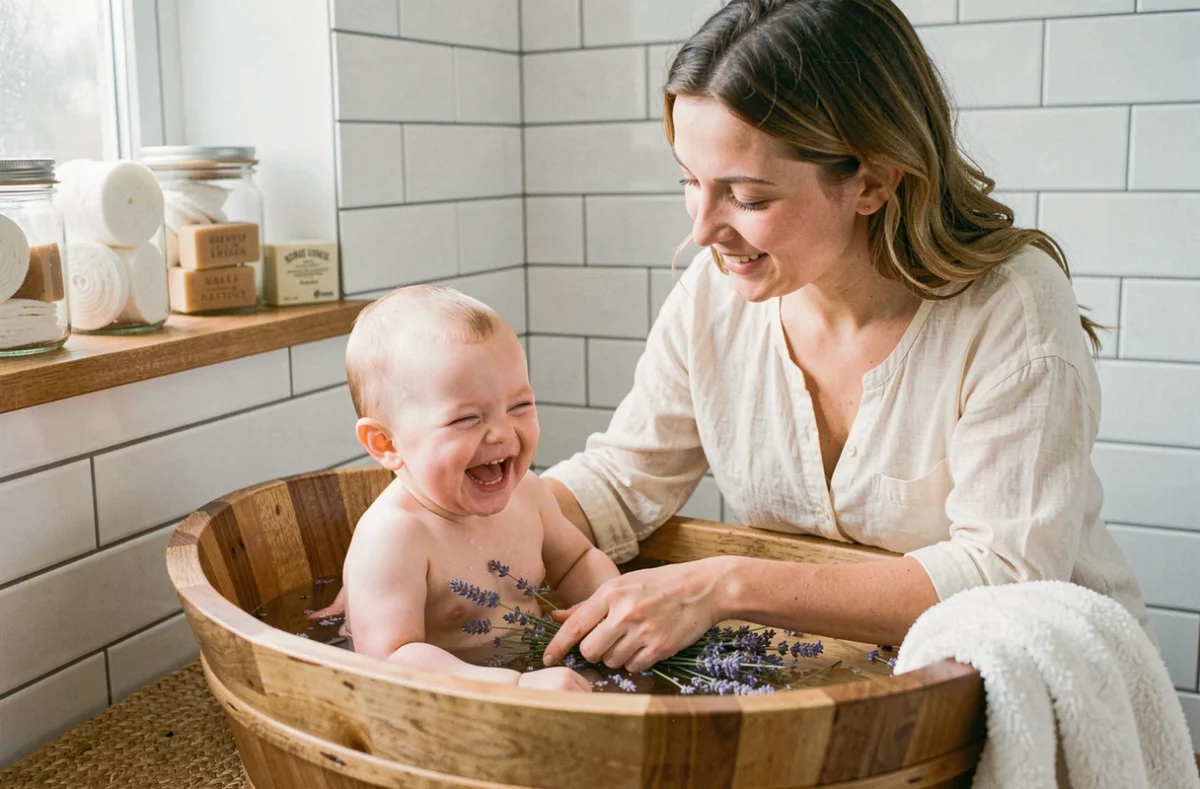
A cotton bodysuit, homemade puree, diapers stacked in a corner: daily life with an infant generates a surprising amount of decisions. Each one impacts the child’s health and the environment. Providing a healthy daily life for your baby doesn’t require changing everything at once, but understanding where the real levers are, those that truly protect their skin, lungs, and the planet.
Endocrine disruptors in childcare products: what the law now requires
Since April 12, 2024, French law requires manufacturers to inform the public when a product contains proven, presumed, or suspected endocrine disruptors above 0.1% by weight. This obligation, stemming from the AGEC law, changes the game for parents.
Before this date, one had to rely on labels or marketing promises. Today, information about endocrine disruptors is a regulatory requirement. You can find it directly on the packaging or the online product sheet.
Specifically, this applies to clothing, toys, bottles, and hygiene products. For parents who want to learn more about bebe-ethique.fr, the product sheets detail the composition of eco-responsible childcare items, making it easier to compare with regulatory thresholds.
Checking this information takes just a few seconds. It’s a more reliable reflex than relying on green packaging or reassuring slogans.

Baby clothes in organic cotton: washing matters as much as the fabric
Choosing clothing made from organic cotton or eco-friendly fibers is often the first step for environmentally conscious parents. The reasoning is logical: fewer pesticides in cultivation, fewer chemical residues on the infant’s skin.
What many don’t know is that washing before first use is an official health recommendation. Anses recommends washing any textile that may come into contact with the skin before first wear. Dyes and finishing treatments leave residues, even on a garment labeled organic.
This precaution also applies to second-hand clothing. A bodysuit obtained from a relative may have accumulated contaminants during storage. A low-temperature machine wash with a gentle detergent is sufficient.
Guidelines for choosing healthy textiles
- Favor labels that certify the absence of harmful substances on the finished product (not just on the raw material), as organic cotton can receive problematic dyes at the end of the chain.
- Avoid very colorful or printed clothes for the first months: the more a fabric is dyed, the higher the risk of chemical residues.
- For second-hand items, check the condition of elastics and metal snaps, which can release nickel when in contact with damp skin.
Buying fewer new clothes and opting for second-hand remains the most effective gesture environmentally. A baby under twelve months only wears each size for a few weeks.
Reusable or disposable diapers: a balance that depends on your washing practices
The reusable versus disposable diaper debate comes up in every conversation among new parents. The ecological balance of reusable diapers heavily depends on how they are washed. This is a point that manufacturers from both sides prefer not to detail.
Reusable diapers significantly reduce waste volume. However, they shift part of the impact to water and energy consumption. Washing at 60 °C with a dryer considerably reduces the ecological advantage compared to air drying and washing at 40 °C.
Have you noticed that online comparisons rarely yield the same conclusions? This is because the outcome changes depending on the washing temperature, the household’s energy source, and the number of children using the same diapers.
Criteria for a choice suited to your situation
If you live in a home with limited drying space and an old machine, eco-friendly disposable diapers (chlorine-free, fragrance-free) may represent a reasonable compromise. If you have access to outdoor space and plan for multiple children, reusable diapers become significantly more advantageous environmentally and financially.
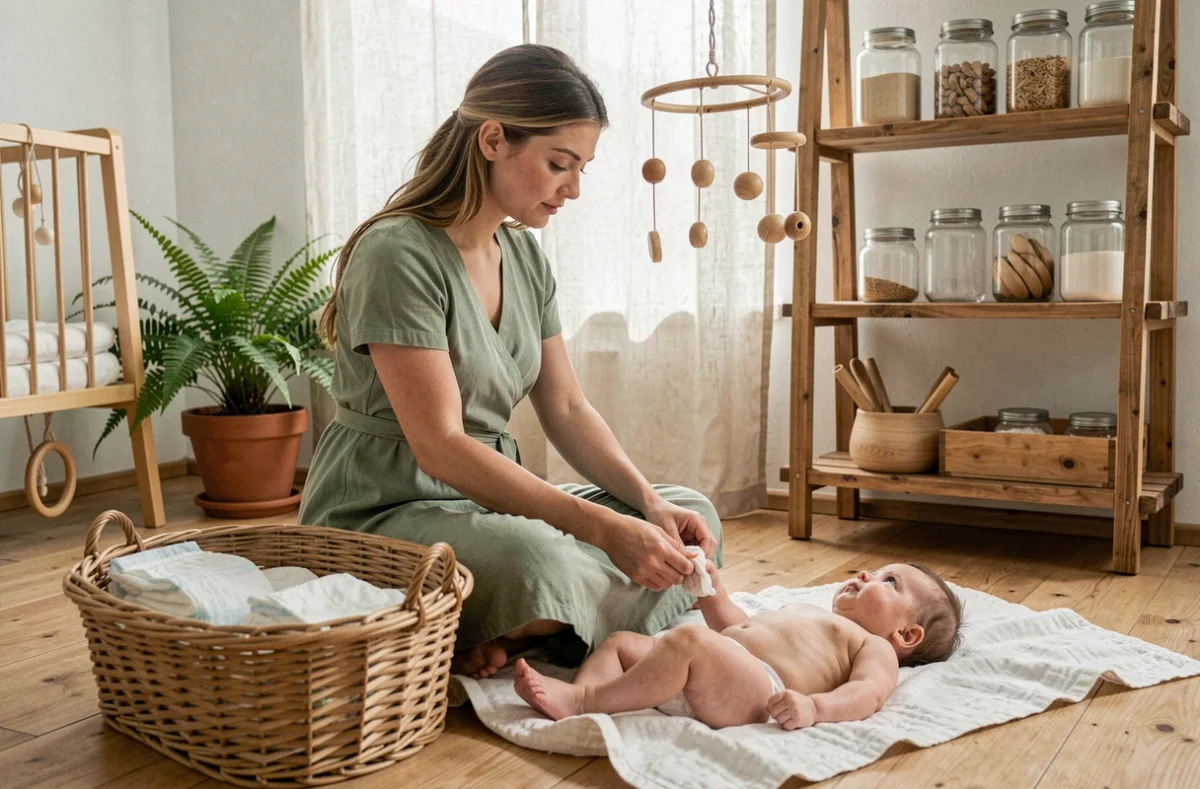
Indoor air quality and infant health: beyond ventilation
Ventilating for ten minutes a day, morning and evening, is advice repeated everywhere. It is valid but incomplete. Indoor air quality also depends on what you introduce into the room.
Scented candles, incense, air fresheners, and certain cleaning products release volatile organic compounds. An infant breathes faster than an adult and absorbs proportionally more pollutants relative to their weight.
Cleaning the baby’s room with white vinegar and black soap covers most domestic hygiene needs. These two products do not release harmful compounds and are cheaper than specialized cleaners.
- Avoid any cleaning products containing formaldehyde, often found in multi-surface cleaners and disinfectants.
- Prefer solid wood furniture or water-based varnished items: new particle boards emit formaldehyde for several months.
- Wash new sheets and sleeping bags before use, just like clothing, for the same reasons.
Placing a new mattress in the room and letting it off-gas its volatile compounds with the window open for a few days before the baby’s arrival is part of simple gestures that reduce the infant’s exposure.
The most protective choices for a baby and the environment often align: fewer processed products, less packaging, simple materials. Every fewer purchase decision is one less waste and one less chemical risk. A healthy daily life for an infant is built with modest habits, not with a catalog of labeled gadgets.