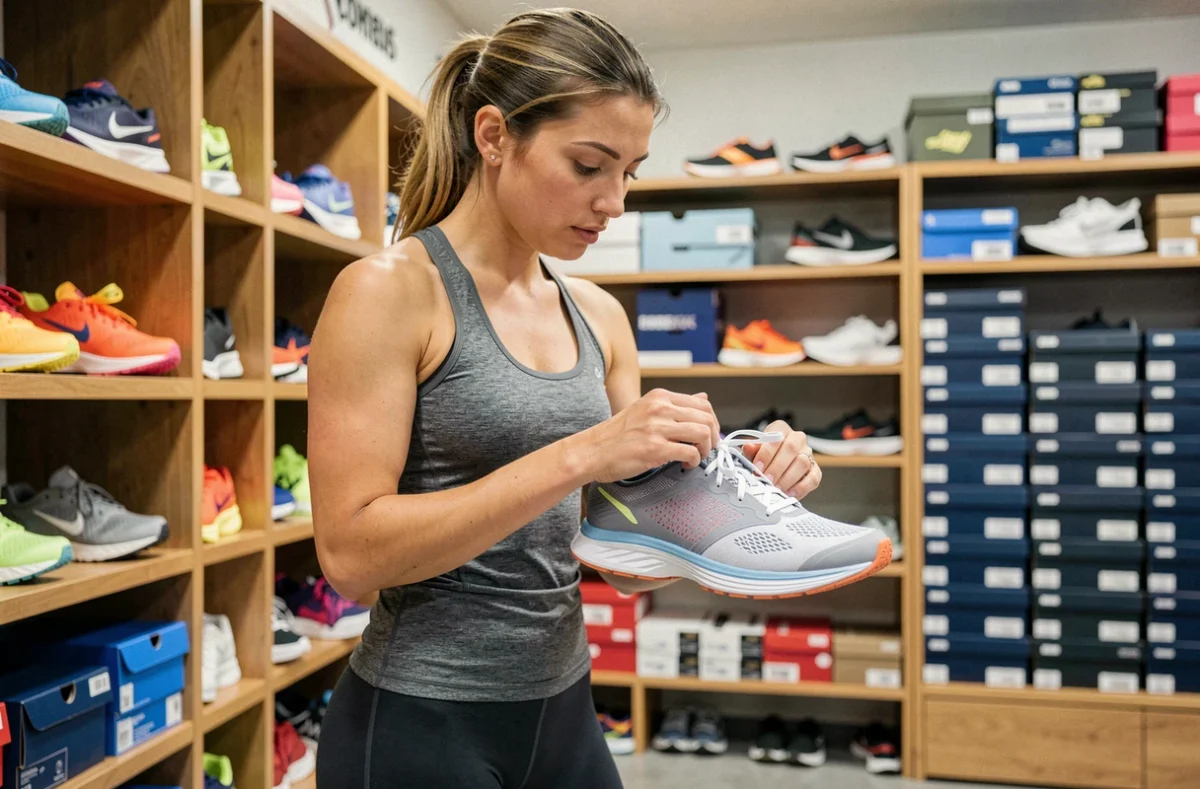
A randomly purchased running short, hiking shoes worn for gym fitness, a yoga mat that is too thin and slips on the tiles: poor sports equipment not only hinders but also slows progress and exposes to injuries. Choosing your gear methodically changes the quality of each session, from the first warm-up to recovery.
Sports shoes: drop and cushioning change everything
Have you ever felt knee or Achilles tendon pain after a few weeks of running? The problem often lies with the shoes, not the training volume.
The drop is the height difference between the heel and the forefoot. A high drop (around 10-12 mm) is suitable for heel-striking runners. A low drop (under 6 mm) puts more strain on the calf and Achilles tendon. Suddenly changing drop causes injuries because the muscles and tendons do not have time to adapt.
Cushioning depends on the runner’s weight, the surface (asphalt, trail, mat), and the distance covered. A highly cushioned shoe absorbs shocks on the road but reduces proprioception on technical terrain. For hiking or trail running, the rigidity of the sole and grip take precedence over softness.
Before buying, it is useful to check the equipment on Quel Coach to compare technical characteristics based on your practice and level.
Match the shoe to your stride, not the other way around
A simple test: observe the wear on your old soles. Wear concentrated on the outer edge indicates a supinated stride. Wear on the inner side signals marked pronation. This information guides the choice of lateral support much better than general marketing.
Technical clothing: prioritize function over style
A cotton t-shirt absorbs sweat and retains it against the skin. The result: irritation, rapid cooling when stopped, discomfort as soon as the effort lasts more than twenty minutes. Synthetic fibers wick moisture away and dry quickly. This is their only reason for existence in sports.
For outdoor activities, the three-layer principle remains the reference:
- A breathable layer close to the body that transfers sweat outward without storing it.
- An insulating layer (fleece, softshell) that retains body heat according to temperature.
- A protective waterproof and windproof layer, worn only when conditions require it.
For safety, some sports require regulatory equipment. A helmet for cycling or climbing, shin guards for football, a supportive sports bra suitable for the intensity of impact for women: protection comes before aesthetic comfort.
Budget and sports equipment: price as a barrier to practice
The cost of sports equipment increasingly weighs on practitioners. A growing share of French people considers sports expenses too high, which directly influences equipment choices.
Second-hand becomes a concrete solution. SportBuzzBusiness reports that 28% of families buy used equipment and 15% borrow it. Organizations like Recyclerie Sportive refurbish rackets, bikes, and ski shoes and sell them at reduced prices.
When to invest, when to save
Not all equipment has the same impact on performance and safety. Here’s a simple rule:
- Shoes and protective gear (helmet, knee pads, sports bra) deserve a new and suitable purchase, as they directly affect biomechanics and safety.
- Mid-range technical clothing is sufficient for most regular practitioners.
- Peripheral accessories (water bottle, bag, towel) hold up well for second-hand or entry-level options.
End of life for sports equipment: the REP system changes the game
Since January 1, 2022, the extended producer responsibility (REP) system covers most sports and leisure items in France. Since 2023, some sellers must take back used equipment for free. Technical clothing and shoes fall under the textile sector.
Why does this point matter when making a choice? Because a repairable or recyclable piece of equipment costs less over time. A running shoe whose sole can be resoled, a short whose seam can be repaired, a bike with easily found parts: these criteria reduce the actual cost per session.
Before buying, checking if the brand participates in a take-back or repair program gives an indication of the product’s durability. This is not purely an ecological argument; it is a measurable economic criterion.
Adjusting equipment to your progress
A beginner in running does not need a carbon shoe designed for a half-marathon in under 1 hour 15 minutes. The equipment must match the actual level, not the dreamed goal. Overly technical equipment can even be detrimental: a minimalist shoe on an unprepared runner increases the strain on the foot.
Reassess your equipment every six months if you practice regularly. Running shoes lose their cushioning after several hundred kilometers. Textiles lose their moisture-wicking properties after many washes. Worn equipment offers less protection and hinders progress without the practitioner realizing it.
Choosing the right sports equipment is not a matter of brand or maximum price. It is a trade-off between the biomechanics of each practitioner, the type of effort aimed for, and the actual lifespan of the product.