When moving in or deciding to start a room from scratch, the first challenge is not the budget. It’s knowing where to begin. Equipping your home with style and functionality requires prioritizing tasks, distinguishing what truly transforms a space from what ultimately clutters a closet.
Electrical panel and NF C 15-100 compliance: the invisible foundation of a functional home
We rarely think about the electrical panel when discussing home equipment. Yet, it is the first item to check before installing anything. A designer light fixture or a fully equipped kitchen is useless if the installation cannot support the load.
The NF C 15-100 standard precisely regulates the sizing of the panel, the number of circuits per room, and the mandatory protections. In renovations, an non-compliant panel blocks the commissioning of any new equipment. Feedback varies on the actual cost of bringing it up to standard depending on the size of the home, but this remains a priority.
Specifically, before choosing a kitchen plan or a home automation system, you should consult an electrician. It’s less appealing than a walnut sofa, but it conditions everything else. To explore the equipment on the iDéco Maison site, you must first ensure that the house can accommodate these devices without tripping the circuit at the first plugged-in appliance.
Furniture made from sustainable materials: certified wood, recycled metal, and the logic of ‘less but better’
The classic reflex when furnishing a home is to buy quickly and in quantity. You fill the living room, the bedroom, the dining room. Six months later, half of the furniture creaks or no longer pleases.
The approach gaining traction in 2025-2026 is the opposite: fewer pieces, but materials that stand the test of time. Certified or recycled wood, recycled metal, and water-based finishes are gradually replacing low-quality particle boards. This shift is no longer reserved for a niche: it is becoming a standard choice in common purchasing.
Which furniture to prioritize for the living room and bedroom
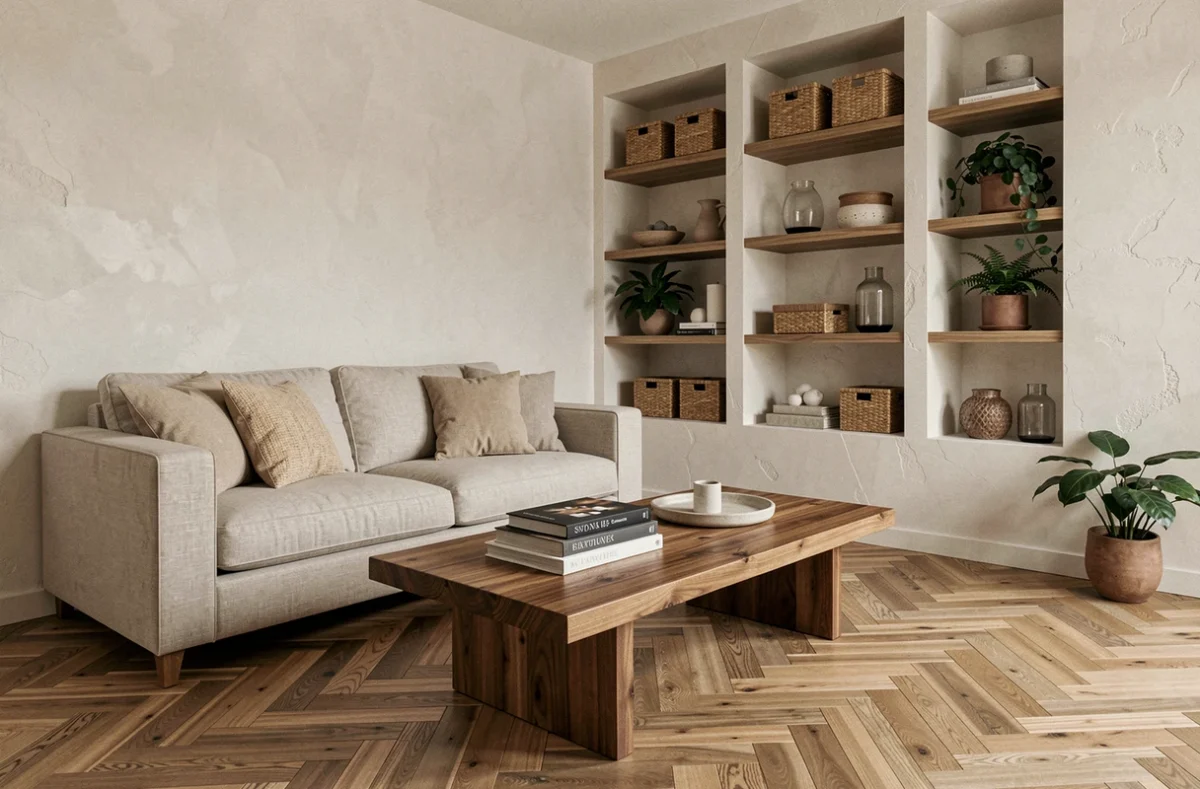
In the living room, the sofa is the main investment. You spend hours on it, it structures the space, it dictates the ambiance. A modular sofa allows you to reorganize the room without having to buy everything anew.
For the bedroom, the bed frame and mattress take precedence over everything else. A solid wood bed frame costs more upfront, but its lifespan far exceeds that of a flat-pack structure. The bedside table can be a vintage piece or a simple stool: this is where you can save without sacrificing functionality.
Curves, walnut, and statement pieces: choosing a coherent furniture style
Recent furniture collections highlight enveloping curves, walnut, and metallic reflections. There is also a resurgence of so-called “expressive” furniture, meaning pieces that assert a strong character rather than blending into a neutral decor.
This trend raises a practical question when furnishing a home: should everything match or should you focus on a few statement pieces?
- One strong piece per room is enough to give character. In the living room, it could be a rounded walnut coffee table. In the kitchen, an island with a raw material countertop.
- The rest of the furniture plays a background role: neutral tones, simple lines, materials consistent with the centerpiece.
- Metallic reflections (brushed brass, patinated steel) work as accents on handles, light fixtures, or furniture legs, not as the main surface.

Kitchen layout: functionality before decoration
The kitchen is the room where the balance between style and functionality is most strained. A beautiful but porous countertop becomes a maintenance nightmare. Stylish cabinets that are poorly arranged waste time every day.
You start with the activity triangle (sink, cooking zone, cold storage), then choose materials and finishes. A successful kitchen layout is measured by daily use, not by the photo.
Drenching and saturated color: an alternative to the accent wall to transform a space
The accent wall, painting a single wall in a bold color, has dominated interior decoration for years. A different approach is gaining ground: drenching. The principle is to apply the same saturated shade to the walls, ceiling, and woodwork of a room.
The effect is radical. Instead of visually cutting the space, you envelop it. In a modest-sized bedroom or living room, drenching can create a sense of depth that an accent wall alone does not produce.
- Drenching works best with deep shades (navy blue, forest green, dark terracotta) rather than bright colors.
- The woodwork, baseboards, and door frames should follow the same shade for the effect to be complete.
- Test a sample on at least two different surfaces before committing, as natural light radically alters the appearance of a saturated color between a vertical wall and a ceiling.
This technique requires a bit of boldness, but it transforms a mundane room into an enveloping space without touching the furniture or layout.
Equipping a home with style and functionality is primarily a matter of sequence. Electrical compliance first, structural furniture next, color and decoration choices last. Each well-handled aspect makes the next one easier to tackle, and the final result more coherent for daily living.