The education of children is often compared to a delicate dance between firmness and tenderness. Parents and educators are constantly in search of that perfect balance, where clear boundaries and necessary discipline harmoniously blend with affection and support. This balance is crucial for the healthy development of children, affecting their self-esteem, social skills, and ability to face life’s challenges. While discipline teaches responsibility and respect for rules, unconditional love provides the emotional security essential for personal growth.
The dynamics of balance: love and discipline in education
In the relentless quest to find the right balance between discipline and love, reflections turn towards the psychological mechanisms that govern our actions and those of our children. The notion of “Unattainable Love,” for example, describes an attachment to an unavailable person, leading to a tendency to flee commitment and a lack of self-esteem. These behaviors, when modeled by parents, can seep into children’s consciousness and influence their future romantic relationships.
Excessive generosity, this desire to meet the needs of others to feel loved, can also trigger a vicious cycle. In such a dynamic, the parent’s lack of self-confidence and the potential extinguishing of desire in the child paint a distorted picture of love and partnership. When Maman Louzou overflows with gifts and attention, disregarding necessary boundaries, the child may learn to associate love with materialism, thus obscuring the value of authentic human exchanges.
Love addiction and emotional imbalance, where one clings to the other, hoping for love and validation in return, are patterns that carry within them the seeds of the savior complex and the reproduction of negative emotional patterns. Children witnessing such dynamics may internalize these patterns, projecting them unconsciously into their future interactions.
The fear of commitment, this fear of forming lasting attachments, can manifest as excessive discipline and conditional love, fueling in the child the anxiety of loss and a perpetual quest for signs of attachment. Gender differences in the expression of affection can also color the educational equation, with women tending to lean towards dependency and men towards detachment. It is by understanding these realities and addressing them with honesty and communication that one can aspire to a balance in the couple and, by extension, in the family.
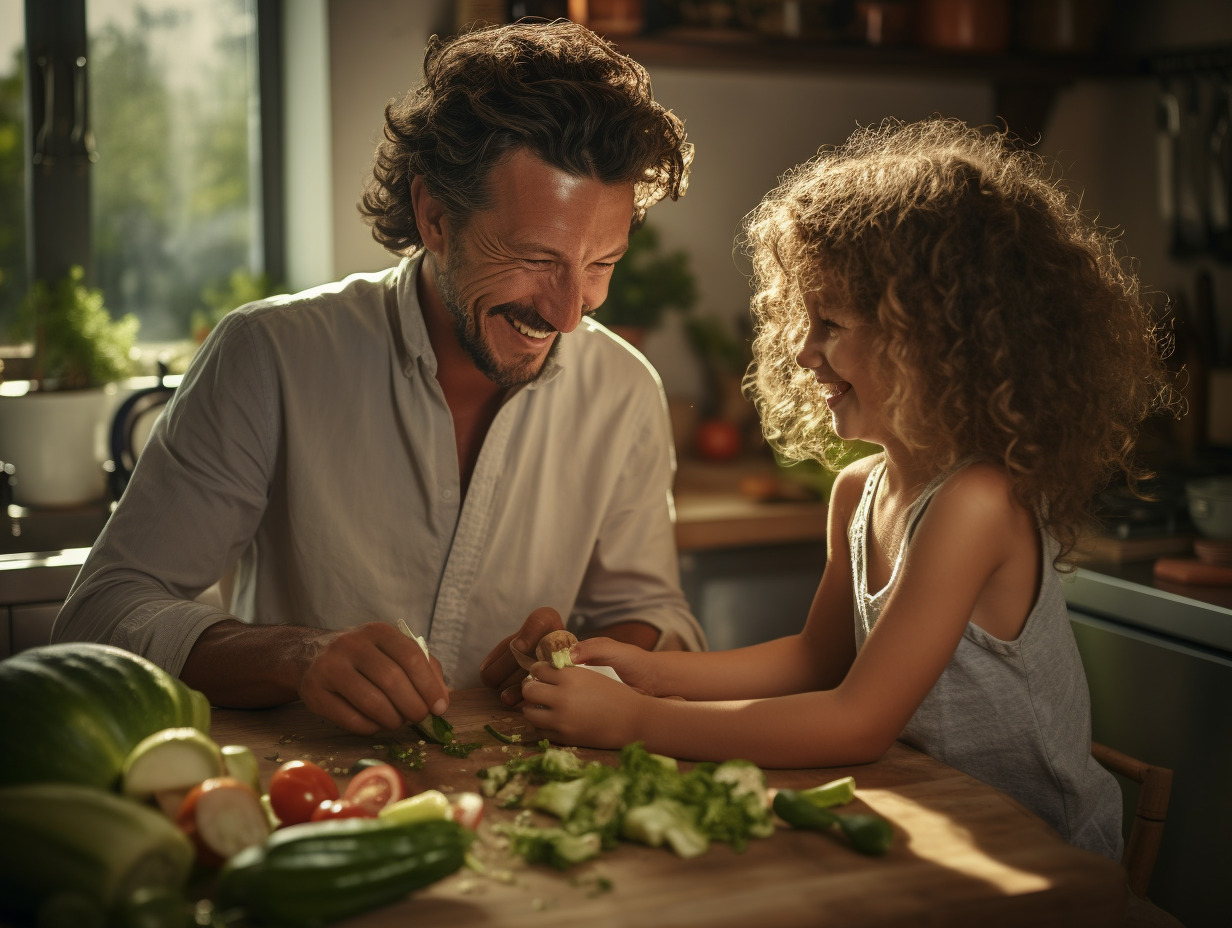
Practical strategies for a healthy emotional balance with children
In the face of educational challenges, a balanced approach between firmness and affection proves to be a healthy middle ground. Authoritarian parenting styles often come with detrimental consequences for the child’s emotional development. Favor a discipline that teaches boundaries with kindness, where rules are clear and consequences logical, without ever sacrificing the emotional bond. Children raised in such an environment often develop a stronger self-confidence and autonomy.
Aware of the pitfalls of love addiction, parents must also engage in deep work on themselves. Therapeutic work, sometimes necessary, helps to defuse personal emotional issues that could be transmitted to children. By investing in their own emotional health, parents model the importance of inner balance and emotional independence.
Communication stands as a pillar of any healthy parent-child relationship. It not only helps maintain a strong and lasting bond but also allows for the expression of each other’s needs and frustrations, thus avoiding emotional imbalance. Attentive listening, regular dialogues, and acceptance of individual differences strengthen mutual understanding and reciprocal respect.
The challenge of work-life balance remains central in managing family emotions. Be aware of the impact of your workload on the time spent with your children. A balanced family environment encourages creativity, relaxation, and better mental health for all, key elements of a thriving family dynamic.