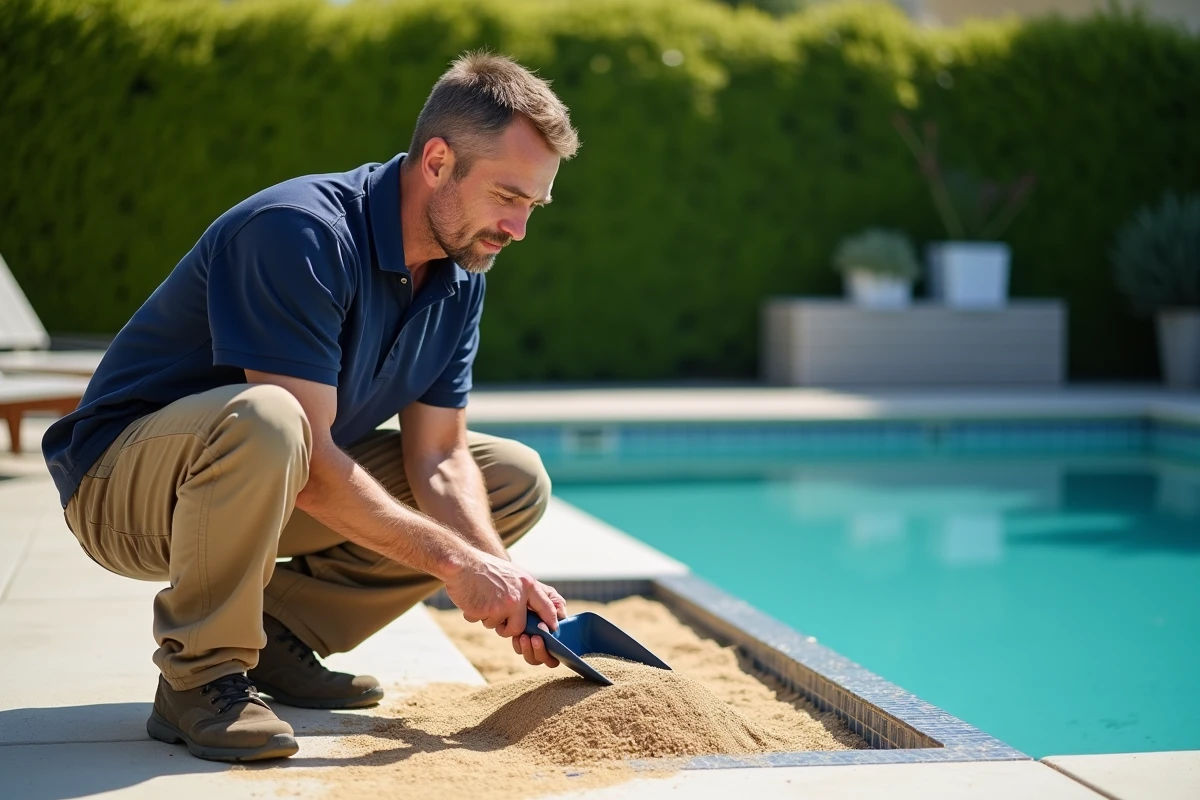
The filter glass for swimming pools has a reputation for superior longevity compared to sand. Manufacturers claim generous lifespans, and pool owners often consider the matter settled for years. On the ground, service pressure, heatwaves, and the intensity of pool use weigh as much as the age of the media.
Knowing when to replace the filtration glass in your pool relies less on a fixed schedule and more on careful observation of your filter’s behavior on a daily basis.
Pool filter pressure: the criterion that the age of the glass does not replace
Most online guides provide an average lifespan for filter glass, expressed in years. This benchmark has the merit of simplicity, but it masks the most reliable parameter for assessing the actual condition of the media: the service pressure measured on the filter gauge.
A new filter, filled with clean glass, displays a reference pressure after startup. This baseline value should be noted. Over the months, the pressure gradually rises, indicating that the glass is retaining more particles and that water circulation is encountering more resistance.
When the pressure persistently exceeds the reference value by a notable threshold, even after a thorough backwash, the glass is no longer filtering properly. It is compacted, clogged, or partially agglomerated. A replacement then becomes relevant, whether the media is three years old or seven years old. Determining precisely when to change the pool filter glass starts with this regular monitoring of pressure, not just a simple count of years.
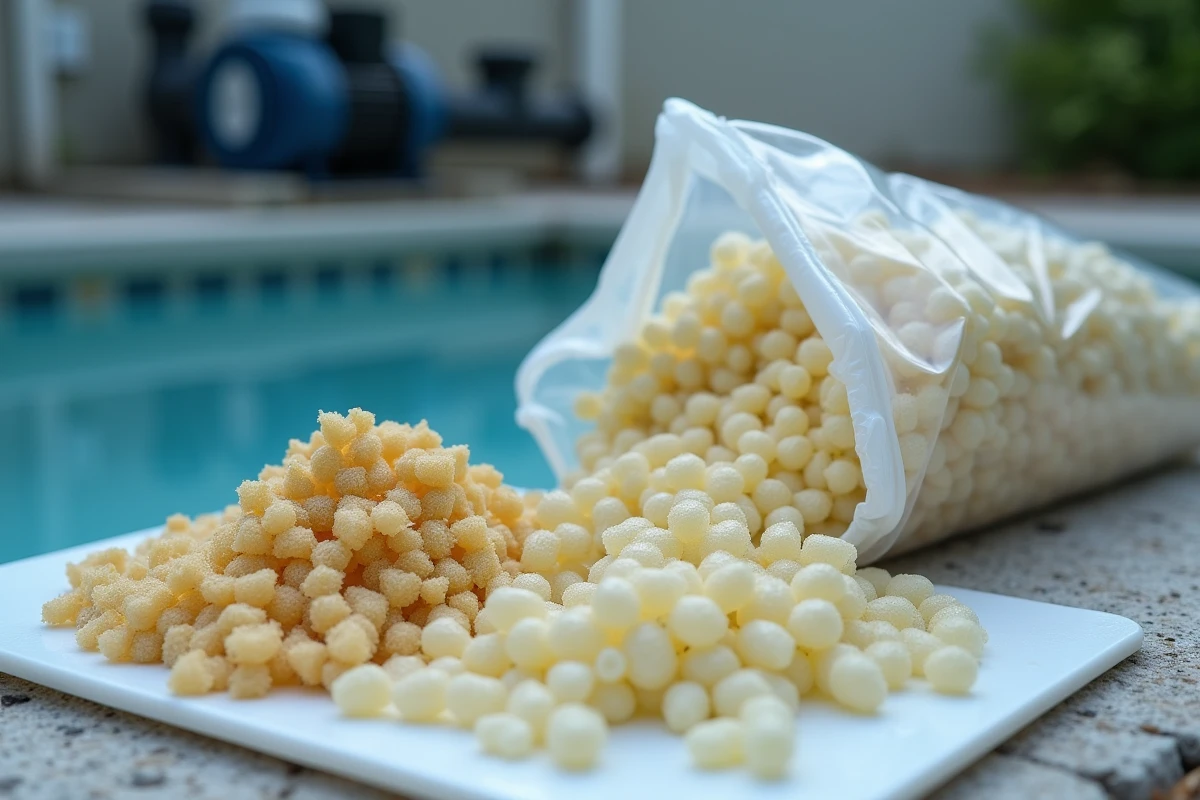
Heatwaves and continuous filtration: why glass ages faster than advertised
The recommended lifespan of filter glass is based on average usage conditions. Prolonged heatwaves, which are becoming increasingly frequent, profoundly alter these conditions.
When the water temperature rises, the proliferation of algae and microorganisms accelerates. The filter runs more often, sometimes continuously, to maintain acceptable water quality. The number of bathers increases, which raises the organic load. The filter glass then endures in a few weeks a strain that, in normal season, would be spread over several months.
Pool professionals observe that pressure rises faster during heatwave summers, and that the glass becomes dirty prematurely compared to theoretical durations. This reality on the ground, often mentioned by maintenance professionals on social networks, remains little integrated into traditional educational articles. For a pool located in a region regularly exposed to heatwaves, relying on the maximum lifespan announced by the manufacturer is optimistic.
Visible signs of worn filtration glass in your pool
The pressure on the gauge remains the main technical indicator. Other signals, observable without instruments, confirm that a replacement is approaching.
- The water loses its clarity despite regular chemical treatment and correct dosages. A persistent haze or slight turbidity often indicates a media that no longer retains fine particles.
- Backwashing becomes ineffective: the pressure barely drops after a backwash, or rises again in just a few hours. The glass is then too compacted to be regenerated by a simple reverse rinse.
- The consumption of treatment products (chlorine, flocculant, pH corrector) increases without an explanation related to pool attendance or weather. A clogged filter forces a chemical compensation for what mechanical filtration can no longer ensure.
Taken individually, each of these signals may have other causes. Combined, they point to filter glass at the end of its life.
Replacement of filter glass and pool chemical consumption
The least documented aspect of replacing glass concerns its impact on the consumption of treatment products. Feedback from maintenance companies describes a recurring pattern: after a well-timed media change, the consumption of chlorine, flocculant, and pH correctors decreases significantly.
The explanation lies in the mechanics of filtration. New glass filters much finer particles than used glass, which removes a significant portion of organic matter from the water before it consumes disinfectant. The filter “breathes” better, water circulation improves, and chemical treatment regains its normal effectiveness instead of compensating for the shortcomings of degraded filtration.
The extent of this decrease in consumption depends on the volume of the pool, the organic load, and the condition of the replaced glass. The principle remains clear: delaying a necessary replacement also costs in chemicals, not just in water quality.
Filter glass or sand: lifespan is not the only calculation
Filter glass lasts longer than sand in a swimming pool filter. This point is agreed upon by professionals and manufacturers. Sand degrades more quickly, forms preferential channels, and loses filtration fineness within a few years.
The initial cost difference of glass compared to sand is generally justified by this superior longevity. However, the amount of media required differs: a filter filled with glass requires less volume than one filled with sand for an equivalent result, which partially reduces the price gap at purchase.
The relevant calculation does not stop at the price of the media and its theoretical lifespan. It includes the actual frequency of replacement (influenced by climate and usage), the associated consumption of chemicals, and the cost of backwashing more or less frequently depending on the condition of the filter. Glass remains a solid choice for filtration, provided that its longevity is not viewed as an absolute guarantee exempting from all monitoring.
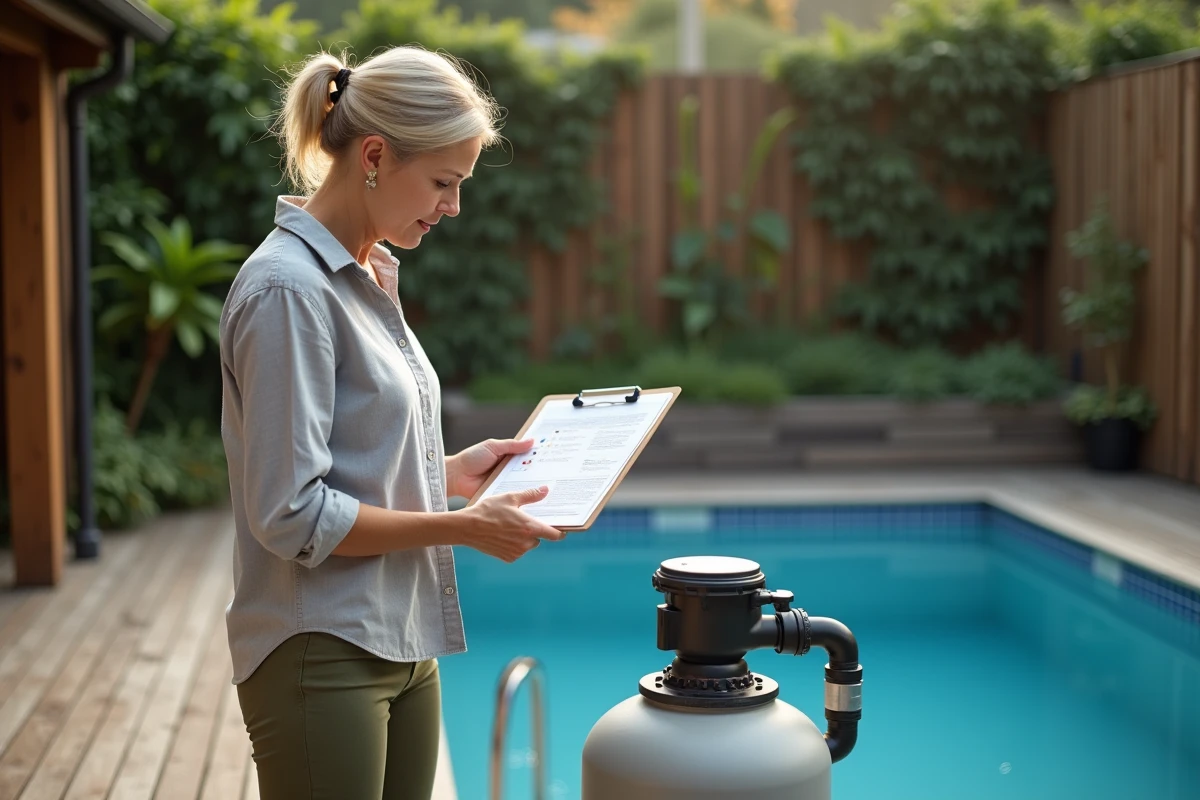
The filter gauge remains the best ally of the pool owner. When the pressure no longer drops after a backwash, when the water resists usual treatments, the glass has reached the end of its time, regardless of its theoretical age.