In the heart of nature, the life of nestlings begins with a delicate hatching, where the shell breaks to reveal a fragile existence. These first moments mark the start of a captivating evolutionary journey. From their nest, these young birds are entirely dependent on the vigilance and selflessness of their parents for food and protection. Gradually, they develop their plumage, an essential guarantee of survival and thermoregulation. The learning of flight follows, a critical milestone where the young must master the art of flying to finally join the autonomous life within their ecosystem.
The first days of life for nestlings
The period of incubation ends with a decisive event: hatching. The bird embryo, after an intense phase of cell multiplication and differentiation, breaks through the calcareous shell and takes its first breath outside the egg. This moment marks the end of embryonic development and the beginning of an autonomous existence. The shell, this protective casing of the egg, gives way to a naked and vulnerable nestling, still reliant on the reserves of the yolk sac that nourished it during its in-ovo development.
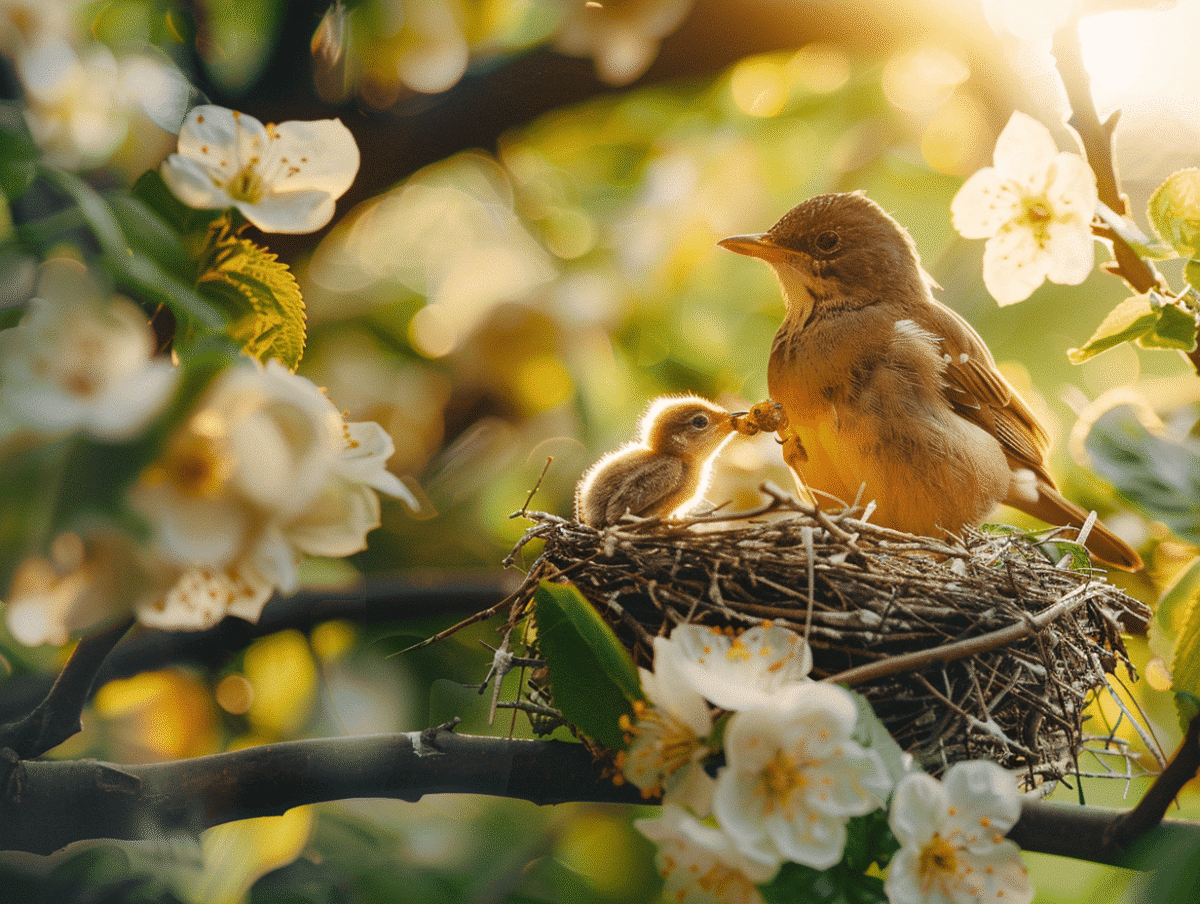
In the nest, the survival of the nestlings now depends on the diligent feeding by their parents. Each baby sparrow, like other nestling species, requires special attention for its growth. The parents strive to provide a varied diet, often composed of protein-rich insects, essential for the development of the plumage. The role of the albumen, this precious source of protein present in the egg, is thus supplemented by the diet that the parents provide with care.
The first weeks of life are also characterized by vulnerability to the elements: water and temperature fluctuations test their resilience. The initial lack of plumage forces them to rely on parental warmth and the protection offered by the nest. The development of the first feathers is therefore a fundamental step, signaling the future ability of the nestling to regulate its body temperature and, ultimately, to take flight towards autonomy.
The development and flight of young birds
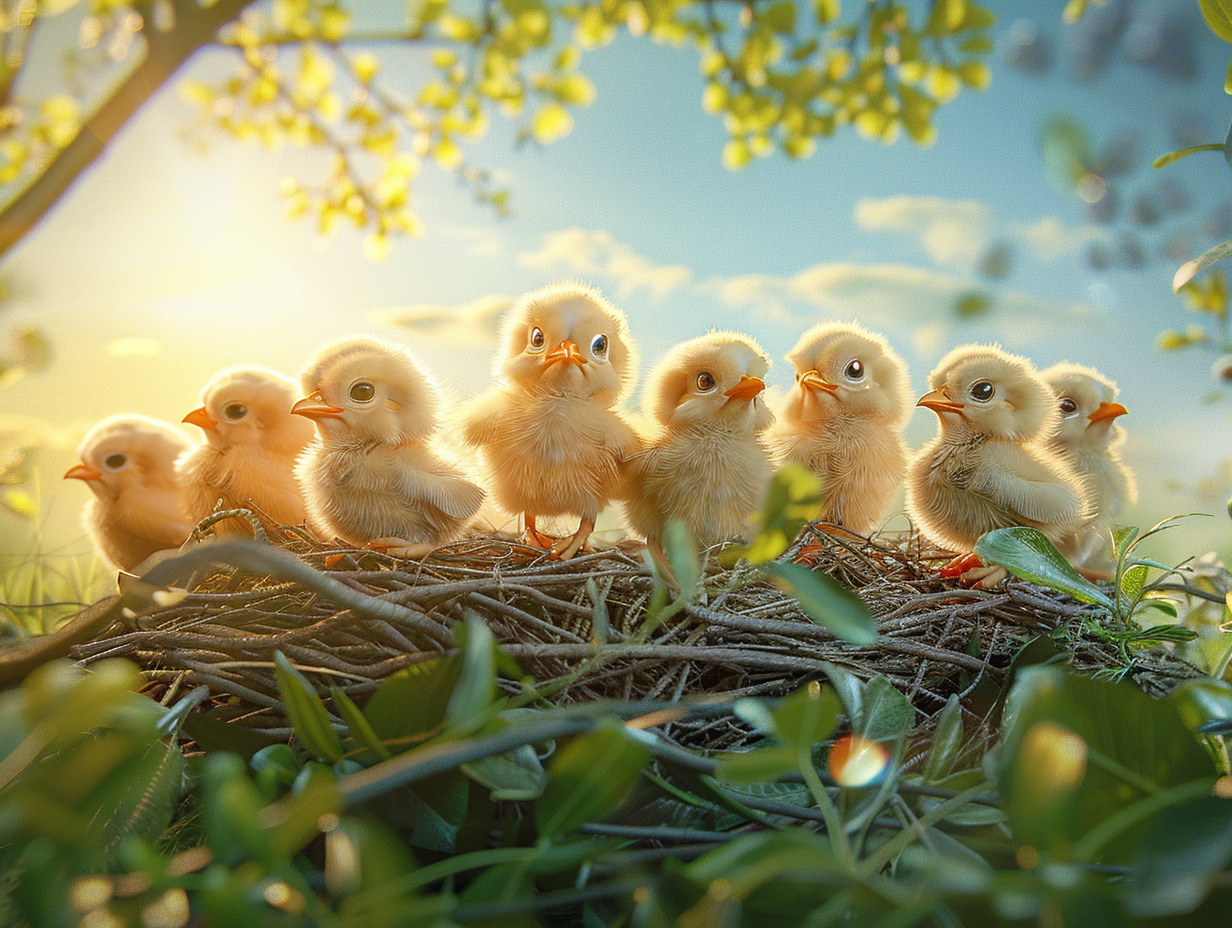
After the first days of absolute dependence, young birds enter a fundamental phase: that of morphological development. The feathers, initially fluffy and sparse, become denser and more structured to form a definitive plumage. This aspect is essential for their survival, as it contributes to thermal insulation and waterproofing of their bodies against water. The wings and beak strengthen, preparing the birds for independent feeding and flight. Each species exhibits particularities in this process, influenced by the conditions of their natural environment.
The role of the parents adapts to this new stage. The feeding evolves: the nestlings gradually learn to feed themselves, a fundamental skill for their future autonomy. Some parents introduce their offspring to hunting or foraging, a practice that varies significantly from one species to another. The relationship between the nestling and its parents thus transforms, shifting from absolute dependence to gradual emancipation.
The approach of flight marks a decisive turning point. Young birds, like the blue tit, experience their first flaps of wings, often clumsy and hesitant. This learning period is fraught with risks but constitutes a natural step towards independence. Once the bird has mastered flight, it can leave the nest and explore its environment, thus marking the culmination of its rearing in the natural habitat.