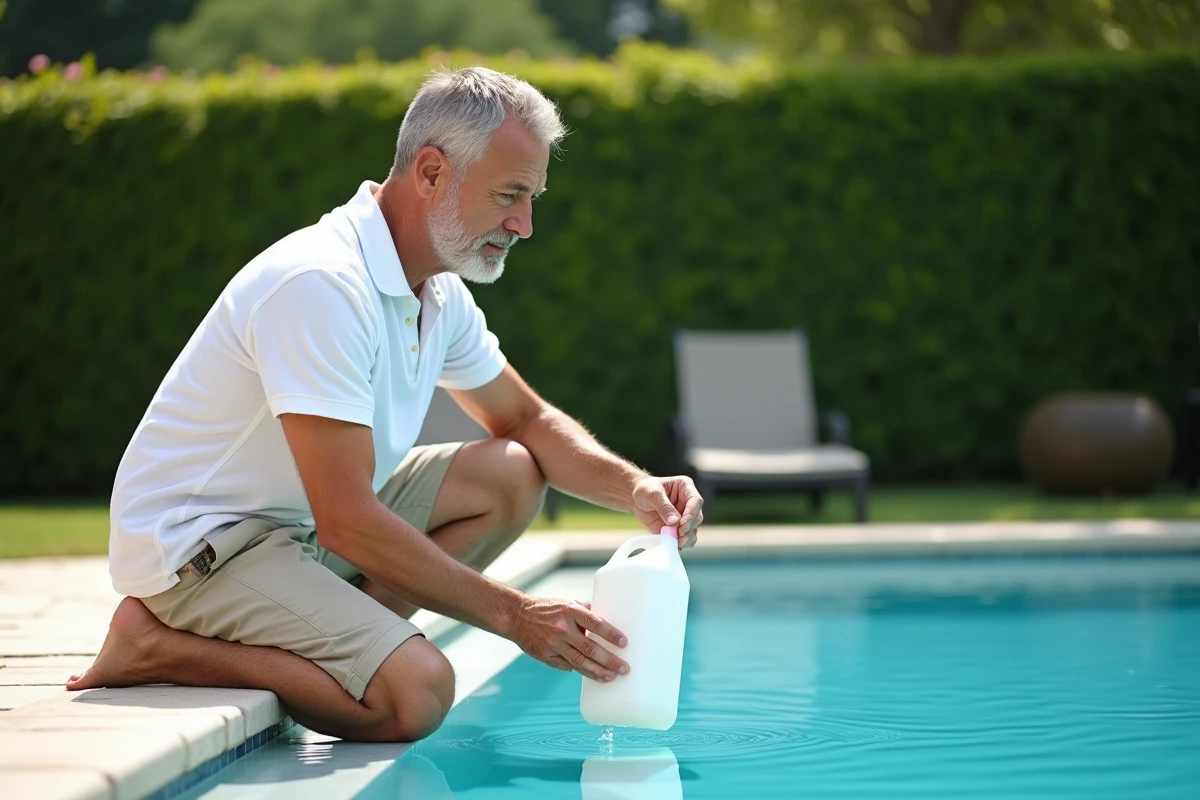
Mixing flocculant and shock chlorine in a pool does not always produce the expected effect. Some instructions recommend separate usage, while some owners seek to speed up water clarity by combining the two products. However, the chemical incompatibilities and risks of unexpected precipitations are very real.
Strict rules govern the sequences and timing of adding these treatments. Ignoring these recommendations can impair product performance and compromise water balance. Manufacturers emphasize adherence to dosages and a methodical application to ensure effectiveness and safety.
Flocculant and shock chlorine: two different allies for your pool water
Eliminating turbidity: this is the reflex of every owner concerned about the clarity of their pool. However, the miracle recipe does not exist. The pool flocculant acts like an invisible net, gathering tiny impurities to facilitate their passage through the filtration system. On the other hand, shock chlorine acts offensively: it eliminates bacteria and microorganisms when a shock treatment is needed. Two solutions, two complementary functions, but they should not be confused.
Faced with cloudy water or algae infestation, the idea of using flocculant and chlorine at the same time is gaining traction. The desire to quickly regain clear water is understandable. But in reality, shock chlorine handles disinfection while the flocculant targets fine particles. Mixing them carelessly can muddle the results: ineffectiveness, unexpected reactions, or even the formation of undesirable deposits. To keep it simple: start with the shock treatment, allow the chlorine level to return to normal, then add the flocculant to clarify the water.
The diversity of filters (sand, cartridge, diatomaceous) and the composition of the water require careful attention to product choice and dosage. To eliminate particles and achieve crystal clear water, it is better to consider the nature of the pool and its maintenance history. An efficient filtration system, combined with controlled water chemistry, yields clear and lasting results.
Is it possible to use them together without risking water clarity?
Combining flocculant and shock chlorine intrigues many owners. It is tempting, but caution must prevail. To speed up clarity, some consider mixing flocculant chlorine: in theory, this seems logical, but the chemical reality of the pool is more complex.
The flocculant (liquid or cartridge) aggregates suspended particles so they can be captured by the filtration system (sand filter, cartridge filter, diatomaceous filter, or bag filter). The shock chlorine disinfects and eliminates microorganisms. If the two products are combined indiscriminately, their effectiveness may suffer: too much chlorine destabilizes the liquid or solid flocculant, clarification stagnates, and deposits may appear.
To avoid these inconveniences, it is better to proceed step by step. First, use shock chlorine to eliminate algae and bacteria, then, once the disinfectant level has returned to normal, introduce the flocculant. This approach preserves the performance of the filtration system for clear water and protects the filters from clogging or insoluble precipitates.
Here are some principles to follow to avoid unpleasant surprises during treatment:
- Do not mix flocculant and shock chlorine in the same container or within a very short time frame.
- Check the chlorine level before adding the flocculant to ensure optimal action.
- Adjust the amount of liquid pool flocculant according to the capacity and type of filter installed.
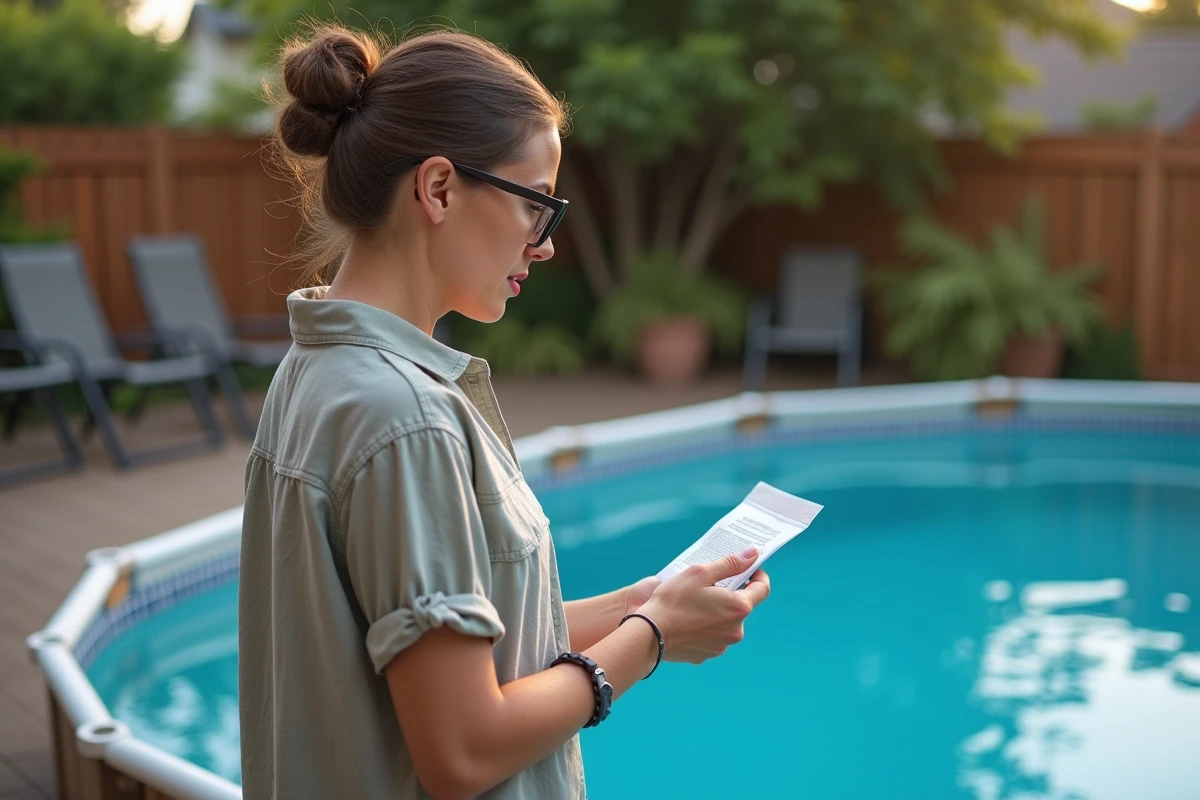
Best practices for effective and safe treatment of your pool
Maintaining water quality requires method and consistency. It is better to avoid rushing: one action at a time, depending on the state of the pool. Shock chlorine is necessary when the water turns cloudy or green. This shock treatment targets algae, bacteria, and invisible impurities. Then wait for the disinfectant level to drop to a normal level before resorting to the flocculant.
The pool flocculant, whether liquid or in cartridge form, serves to group particles that are too fine to be filtered directly. The filtration systems (sand, cartridge, diatomaceous) then capture these clusters, making the water clearer and more transparent. This sequence limits the creation of unexpected deposits and optimizes the lifespan of the filters while preserving water quality.
To maintain effective and safe action, keep these recommendations in mind:
- Carefully apply the dosages indicated on each product package.
- Let the filtration run continuously after adding the flocculant, for up to 24 hours if necessary.
- Remember to clean the filter regularly, especially after a shock treatment combined with a flocculant.
A point of attention: not all flocculants are suitable for all filters. Some cartridge or diatomaceous devices require specific formulations. Taking the time to choose suitable products and to follow each step of the treatment is the guarantee of a pool maintenance without unpleasant surprises and of water that invites you to dive in.
At the end of rigor and patience, the reward: a sparkling pool, ready to welcome the most demanding swimmers. Sometimes, it is in the discipline of simple gestures that the true transparency of the water is achieved.